
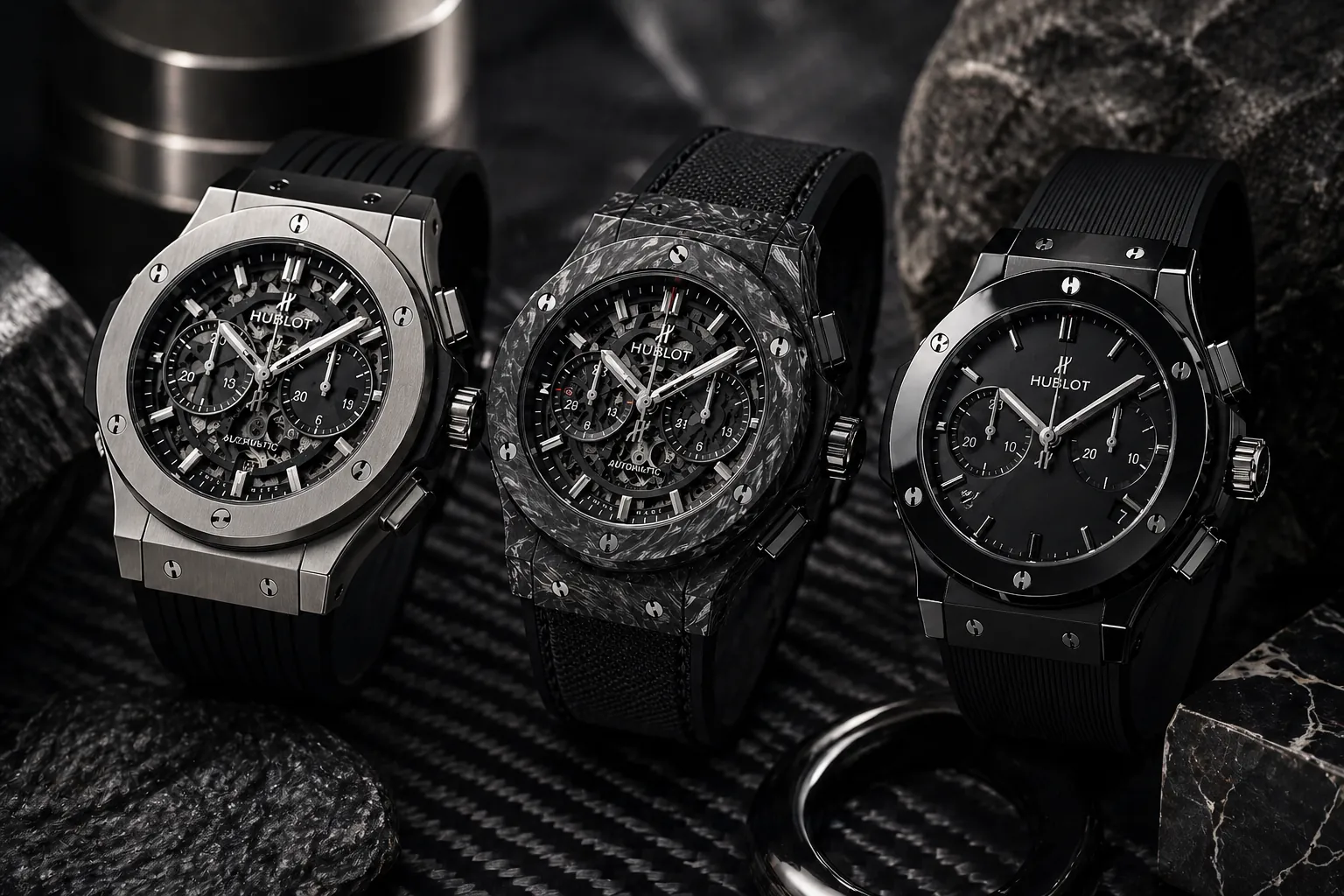
When it comes to luxury watches, few brands push the boundaries of materials quite like Hublot. Known for its “Art of Fusion” philosophy, Hublot combines traditional Swiss watchmaking with cutting-edge materials to create timepieces that are both visually striking and highly durable.
In this guide, we’ll break down three of the most iconic materials used by Hublot: titanium, carbon fiber, and ceramic—and help you understand which one might be right for you.
Why Materials Matter in a Luxury Watch
Before diving into specifics, it’s important to understand why materials are such a big deal.
A watch isn’t just about telling time—it’s about:
- Durability (scratch resistance, wear resistance)
- Comfort (weight, skin feel)
- Style (finish, color, texture)
- Innovation (what sets a brand apart)
Hublot stands out because it doesn’t just use premium materials—it reinvents them.
Titanium: Lightweight Strength
What is Titanium?
Titanium is a high-performance metal widely used in aerospace and medical industries. Hublot uses Grade 5 titanium, which is stronger and more durable than standard titanium.
Key Benefits
- Extremely lightweight (about 40% lighter than steel)
- High strength-to-weight ratio
- Corrosion resistant
- Hypoallergenic (great for sensitive skin)
How It Feels on the Wrist
Titanium watches feel almost effortless to wear. If you want a large watch like the Big Bang without the heavy feel, titanium is an excellent choice.
Best For
- Daily wear
- Active lifestyles
- Those who prefer comfort over weight
Carbon Fiber: Modern and Sporty
What is Carbon Fiber?
Carbon fiber is made by weaving carbon strands into a composite material. Hublot takes it further with innovations like Texalium® and forged carbon, creating unique patterns and finishes.
Key Benefits
- Ultra-lightweight
- Extremely strong and durable
- Distinctive, high-tech look
- Each piece often has a unique pattern
Why Hublot Excels Here
Hublot is one of the leaders in carbon fiber watches. Their designs often combine carbon fiber with bold cases, skeleton dials, and sporty aesthetics.
How It Looks
Carbon fiber has a matte, textured, futuristic appearance—perfect if you want something that stands out.
Best For
- Sports watch lovers
- Modern, edgy style
- Collectors looking for something unique
Ceramic: Scratch-Resistant Elegance
What is Ceramic?
Ceramic used in watches is a high-tech material made from zirconium oxide. It’s not the same as everyday ceramic—it’s engineered for extreme durability.
Key Benefits
- Highly scratch-resistant (much harder than steel)
- Fade-resistant color (won’t lose its shine over time)
- Smooth and luxurious finish
- Lightweight compared to metal
Hublot’s Innovation
Hublot has developed advanced ceramic colors, including bold tones like red, blue, and even skeletonized ceramic designs.
How It Feels
Ceramic feels silky smooth on the wrist and maintains a “like new” look for years.
Best For
- Long-term wear without visible scratches
- Elegant yet modern style
- Buyers who want durability with luxury aesthetics
Titanium vs Carbon Fiber vs Ceramic: Which One Should You Choose?
Here’s a quick comparison:
| Material | Weight | Durability | Style | Best Use |
|---|---|---|---|---|
| Titanium | Very light | High | Classic + modern | Daily wear |
| Carbon Fiber | Ultra light | Very high | Sporty, futuristic | Active lifestyle |
| Ceramic | Light | Extremely scratch-resistant | Sleek, luxury | Long-term elegance |
Final Thoughts: The Art of Fusion
Hublot doesn’t just use materials—it combines them. Many of their watches feature hybrid designs like:
- Ceramic + titanium
- Carbon fiber + rubber
- Gold + ceramic
This fusion is what makes Hublot truly unique in the luxury watch world.
If you’re choosing a Hublot watch, think about your lifestyle:
- Want comfort? → Go with titanium
- Want bold and modern? → Choose carbon fiber
- Want durability and luxury finish? → Pick ceramic
Looking for Your Perfect Hublot?
Explore our collection to find the perfect combination of style, performance, and innovation.
